


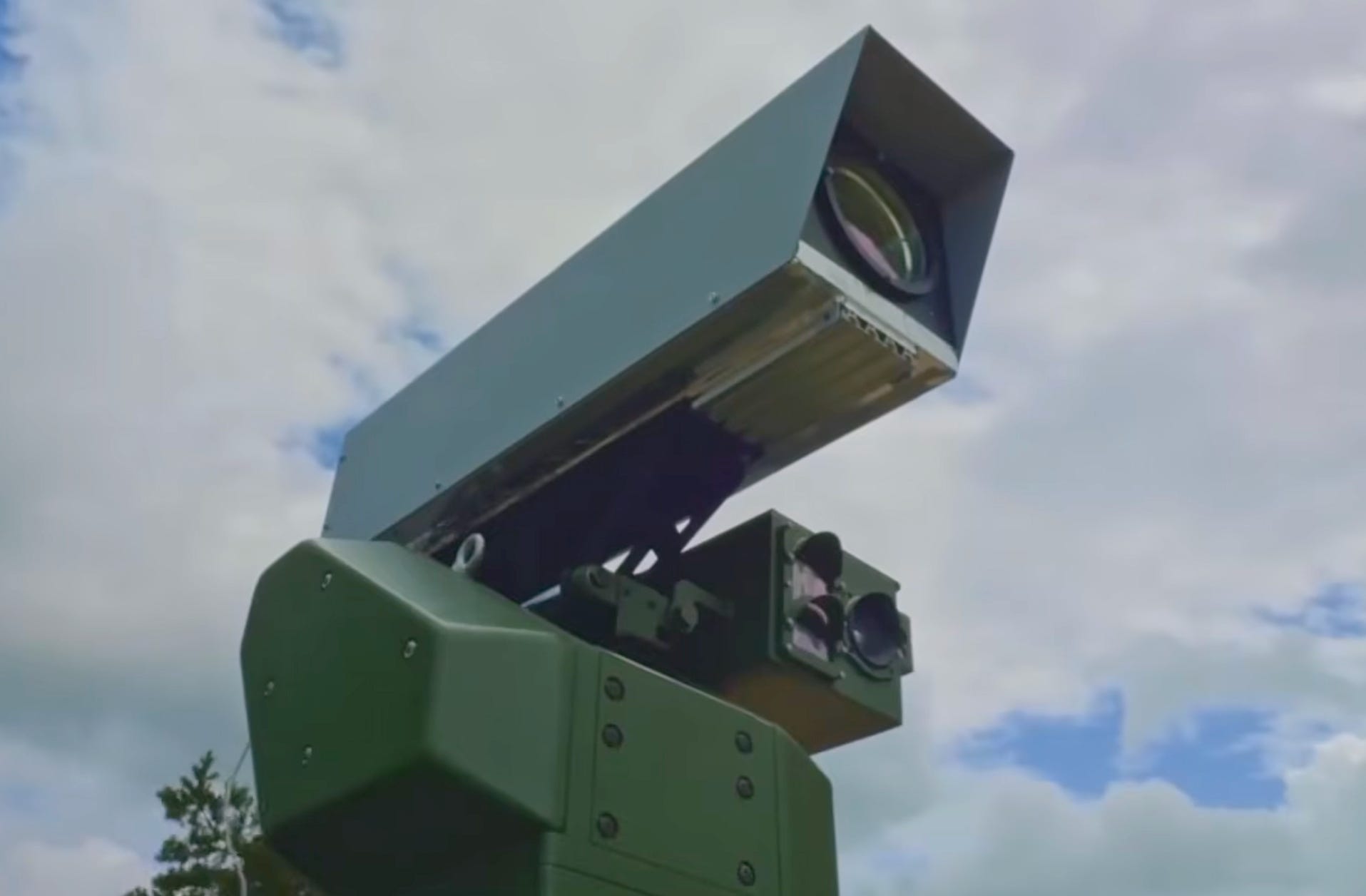
The Laser Wars are officially upon us.
On November 25, Ukrainian defense technology advisor Serhii “Flash” Beskrestnov published footage showing a 4 kilowatt ‘Blysk’ high-energy laser weapon downing a jet-powered Geran drone while guarding an unidentified critical infrastructure facility, which he described as the first publicly known instance of a laser destroying this class of unmanned threat in combat. The engagement is a turnaround for Blysk, which was developed by defense contractor Carmine Sky under the Ukrainian Ministry of Defense’s experimental Private Air Defense program with support from the Brave1 defense-tech cluster: the system had initially failed to score any drone kills in its first days on duty in Kyiv in early November due to persistent fog and cloud cover over the capital city.
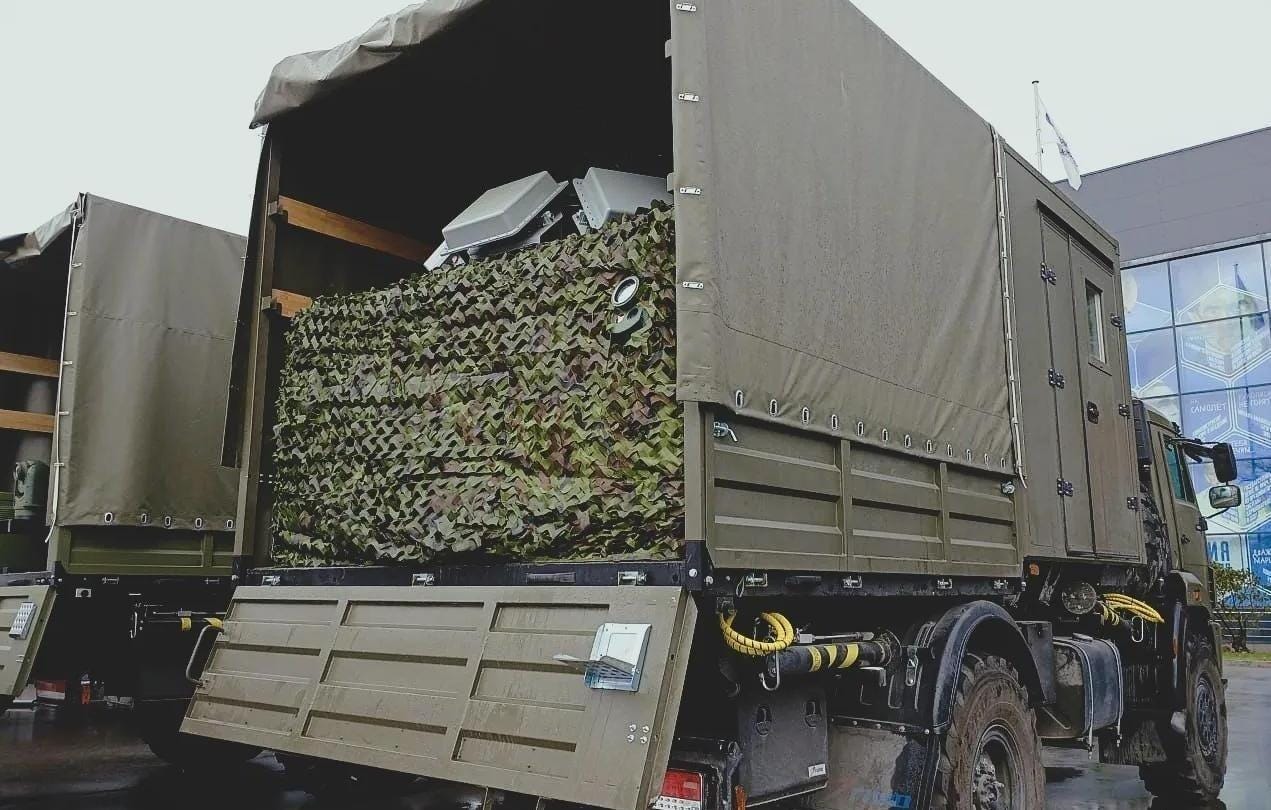
But Ukraine’s historic laser shootdown did not occur in a vacuum. Beskrestnov’s reveal came one day after Sergei Chemezov, CEO of Russian state-run defense conglomerate Rostec and a close ally of President Vladimir Putin, stated in an interview with TASS that a laser weapon deployed to protect a Rostec facility in an unspecified border region had shot down nearly a thousand Ukrainian drones in the last two months, destroying “dozens” every day. While Chemezov did not name the specific laser weapon, it is possibly the truck-mounted counter-drone system that Rostec’s Shvabe holding unveiled at the Interpolitex defense expo in Moscow in October 2025.
With their respective track records of hyping nascent directed energy capabilities, Ukraine and Russia’s new claims warrant some skepticism. For Ukraine, the lack of detail surrounding the Blysk engagement leaves key questions unanswered, from range to how many attempts preceded the kill. Beskrestnov later stated that the laser doesn’t burn through drones, but holds a beam on a single spot until the target overheats from the inside, a process that takes several seconds against a Geran’s layered hull compared with a fraction of a second for a smaller first-person view drone. For Russia, a thousand drones over 60 days comes out to around 16 or 17 a day, while “dozens” a day points to around 1,400 laser shootdowns over two months – a disconnect that colors Chemezov’s comments as inflated rhetoric designed to woo potential customers who, as he told to TASS in the same interview, are“not yet actively acquiring” other Rostec air defense capabilities to protect critical infrastructure.
Still, the parallel announcements mark an inflection point for the rise of laser weapons. While Israeli laser weapon may have scored the world’s first known combat laser kill sometime between 2023 and 2024 and American systems are actively in the drone fight both at home and abroad, the Ukrainian and Russian laser shootdowns mean that, for the first time in history, both sides of a major military conflict are using laser weapons to shoot down incoming airborne threats. Laser weapons have been shooting down drone targets for a half-century, but the age of laser warfare has finally arrived.
For Ukraine, the Blysk engagement represents the culmination of years of accelerated directed energy research and development efforts that have at times lagged behind outsized claims from military leaders. Fulltime Robotics’ 1.5 kw Slim Beam laser turret has only been proven on testing grounds. LAZR’s truck-mounted Sunray, first introduced to the world in February and marketed as battle-tested, has yet to rack up a public laser kill. While drone maker UFORCE claimed in November its unnamed laser system “can already shoot down drones,” there is no publicly available evidence that it has actually done so. Even Celebra Tech’s 3 kilowatt “Tryzub” (or “Trident”) laser weapon, first announced in December 2024 and later billed as capable of downing aircraft at ranges of up to 5 kilometers, was only just deployed with a combat unit in late November; As recently as July, Deputy Commander-in-Chief Andrii Lebedenko claimed Ukraine’s laser weapons were “already working against Shaheds” four months before the first public evidence of a Geran kill. Even Tryzub’s crews were candid about that gap: “It’s a bit challenging to deal with jet-powered ‘Shaheds,’ but we’re trying to figure it out.”
Indeed, Blysk’s target makes Ukraine’s inaugural laser kill especially notable. A jet-powered Geran attack drone is significantly larger and flies far faster than the propeller-driven Shahed-type drones that Russia has launched into Ukraine by the hundreds each night, which means a laser weapon has less time to maintain its beam on a vulnerable spot. Downing a Geran with a 4 kw system (compared to, say, a 20 kw system like those increasingly fielded across the United States) suggests that Carmine Sky has made significant progress on the system’s target acquisition and tracking capabilities in order to minimize dwell time. That said, one kill is just one kill: Ukraine hasn’t said how many engagements Blysk has attempted, at what range, or in what weather, and Beskrestnov himself described the system as still in testing even as it guards real infrastructure.
Russia’s embrace of laser warfare has appeared similarly elusive despite renewed directed energy R&D efforts. In March 2018, Putin unveiled Peresvet, a trailer-mounted laser system that entered experimental combat duty that December and is generally understood to dazzle reconnaissance satellites. In May 2022, then-Deputy Prime Minister Yury Borisov claimed Russia had sent Peresvet and a newer system, Zadira, to Ukraine, with the latter capable of burning through incoming drones within seconds — claims US Defense Department flatly rebuffed those claims and Ukrainian President Volodymyr Zelensky compared to Nazi “wunderwaffe” (“wonder weapon”) propaganda during World War II.
But Moscow’s laser hardware has become more tangible in recent years. In April 2025, Putin ordered the Russian defense industry to accelerate laser weapon development. A month later, Russian channels published footage of China’s 30 kw Silent Hunter laser weapon system downing drone targets; the following August, a Ukrainian media outlet reported that a Russian laser system had successfully shot down Ukrainian drones in Moscow’s first publicly known combat laser kill. By July 2026, Industry Minister Anton Alikhanov stated that a laser weapon deployed to protect an unnamed production facility had downed nearly 60 drones in a month. A month later, Russian state TV showed an unnamed laser system on duty protecting strategic facilities, with pro-Kremlin bloggers claiming it had destroyed several hundred Ukrainian drones. (And this is to say nothing of low-powered laser dazzlers like those deployed to the Russian port city of Novorossiysk.)
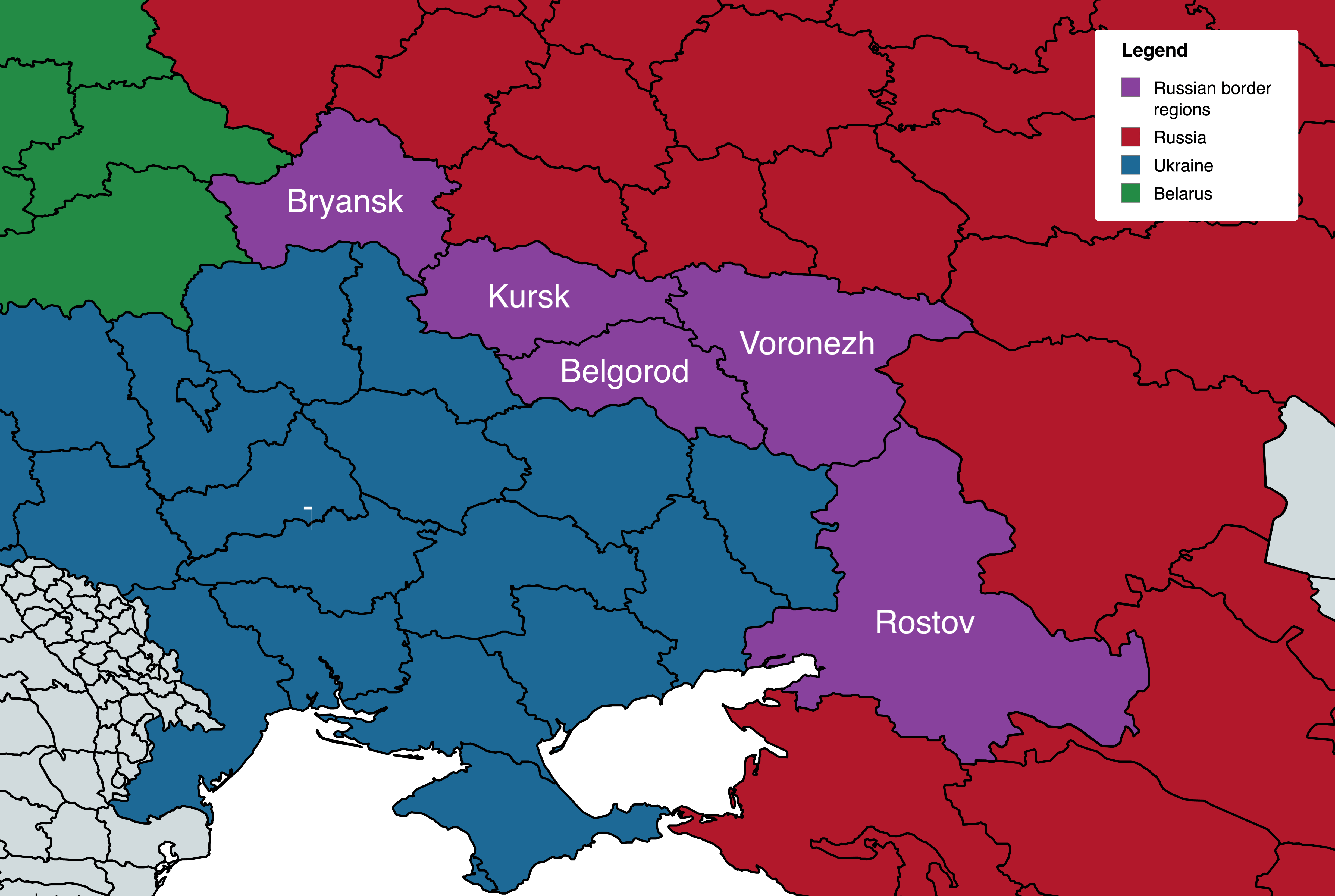
Rostec CEO Chemezov’s claim that a single laser weapon has knocked out nearly 1,000 drones in two months isn’t completely impossible. At 16 or 17 kills a day, a single system would account for roughly 5 percent of all the drone threats that Russian governors reported downing over Kursk and Belgorod, the two most heavily targeted oblasts on the Russia-Ukraine border. To reach 1,000 kills, a system with an effective range of several kilometers would need to protect a high-value target under constant threat of drone attack. While Rostec has several plausible defense-industrial facilities located in Russia’s border oblasts – the Voronezh aircraft plant, part of United Aircraft Corporation (UAC), in Voronezh; the Bryansk Electromechanical Plant, part of the Concern Radio-Electronic Technologies’ electronics holding, in Bryansk Oblast; and Rostvertol in Rostov-on-Don and Beriev in Taganrog in Rostov Oblast – only the Kursk-Belgorod corridor sees the drone volume that could match Chemezov’s rate, and only the Kursk Oblast has documented Rostec enterprises.
Still, Chemezov’s claim is a stretch in the context of other recent laser engagements around the world. Israel, with the first publicly known laser shootdown, only notched 35 kills on Hezbollah drones between late 2023 and the November 2024 ceasefire. More recently, a 20 kw Army Multi-Purpose High Energy Laser deployed to the US southern border with Mexico downed 11 cartel-linked drones during a 12-day period over August and September, according to US Northern Command. While Russia’s border oblasts are arguably a far denser threat environment than the Israel-Lebanon or US-Mexico borders, 1,000 kills in two months would mean that Rostec’s laser weapon is engaging more drone targets (and faster) than any other known system — and somehow, the conglomerate has no visual evidence to prove it.
The first two-sided laser war in military history looks nothing like our science-fiction visions of future combat. Instead of C-beams glittering in the dark near the Tannhäuser Gate or phased plasma rifles in the 40-watt range, it’s being fought by a few kilowatts strapped to the back of combat vehicles or deployed to protect critical infrastructure from the specter of unmanned death arriving suddenly from above. And while the economics of directed energy weapons remain a compelling argument against scarce and expensive missiles and interceptors, neither Ukraine nor Russia has yet put these systems into mass production for fielding at scale. For now, laser weapons remain an emerging echelon of a layered defense architecture.
Welcome to the Laser Wars. Hope you survive the experience!
