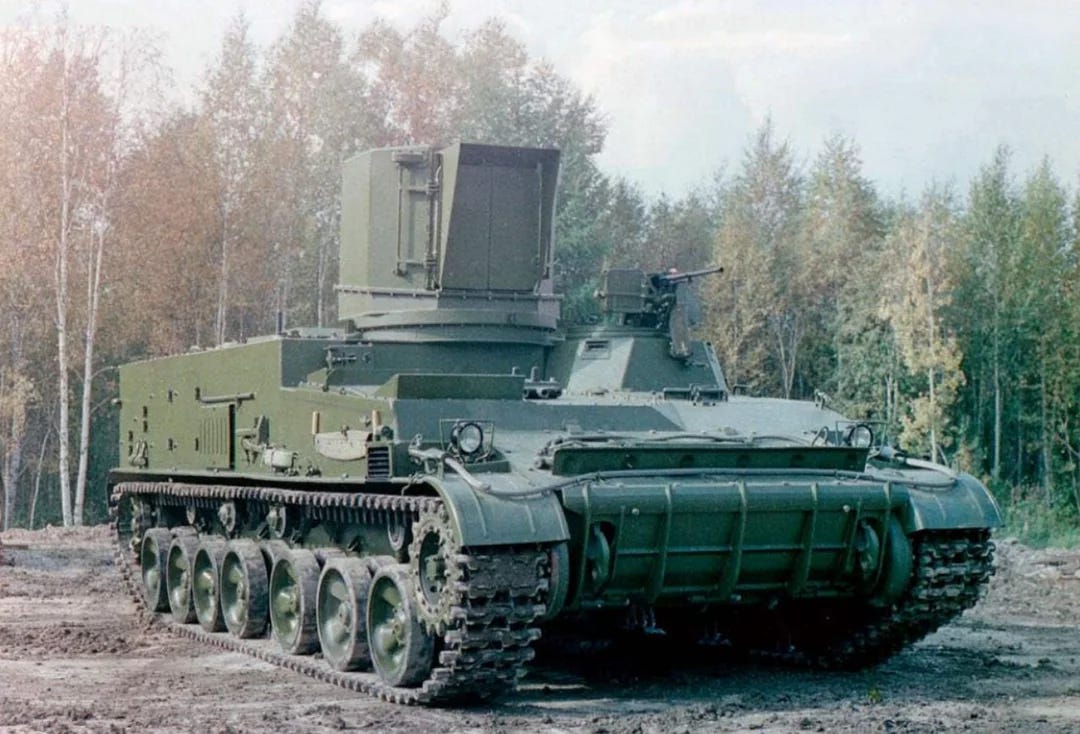
That Time the Soviet Union Allegedly Used Lasers to Blind Mujahideen Fighters in Afghanistan
US intelligence agencies suspected Moscow was already sending directed energy weapons into battle.

The United States may lead the world in the development of military laser weapons for air defense,1 but Russia can also claim a grim distinction: pioneering their real-world combat use as blinding antipersonnel weapons during the Cold War.
In a declassified September 1987 technical intelligence report from the Central Intelligence Agency’s Office of Scientific and Weapons Research titled “Soviet Battlefield Lasers: Emerging Threat of Blinding and Antisensor Weapons,” the agency claimed the Soviet Union had used lasers to deliberately blind human adversaries on at least two separate occasions: against Chinese troops in Manchuria during Sino-Soviet clashes in 1969 and against Mujahideen fighters in Afghanistan at some point following Moscow’s 1979 invasion.
Few details on the incidents are publicly available. The entire section of the CIA report describing the episodes is completely redacted, and the only explicit references to them appear in the document’s table of contents.
A Soviet laser strike wasn’t outside the realm of possibility. Moscow had been experimenting with laser weapons since the mid-1960s and had developed a handful of dedicated tactical systems at the time, including the tracked-chassis 1K11 Stilet, the 1K17 Szhatie “laser tank,” and the ZSU-23–4 Sangvin anti-aircraft system. By the early 1980s, the US and Soviet Union appeared locked in a directed energy arms race driven by the mutual concerns of a “laser gap” between the two superpowers.
Indeed, US intelligence agencies appeared increasingly concerned that the Soviets were using Afghanistan as a battle lab for next-generation weapons. In 1985, the US Defense Intelligence Agency commissioned prolific in-house artist Edward L. Cooper to produce a lithograph depicting a Soviet combat vehicle armed with a laser weapon, described as a “Soviet Mobile Laser,” trundling down an Afghan mountain pass as part of the agency’s Military Art Collection. Created purely for illustrative purposes for the Pentagon’s annual Soviet Military Power report, the lithograph isn’t evidence of an actual deployment, but it reflected the growing suspicion across the US intelligence community that Moscow was already sending laser weapons in battle.
“The Soviets continued a large, well-funded program to develop tactical laser weapons in the 1980s,” the lithograph’s official caption reads. “There were reports that the USSR employed mobile laser platforms in Afghanistan against personnel, unprotected targets, and sensors.”

Testimony from Soviet defectors not only lent credence to this suspicion, but indicated the alleged use of blinding lasers extended beyond Mujahideen fighters. In a 1986 first-hand account of Soviet combat operations in Afghanistan conveyed to Ludmilla Thorne, a Soviet specialist at the non-profit Freedom House, one former Russian prisoner of war described personally using a vehicle-mounted laser to blind Afghan villagers:
Both Nikolay and Igor served in Kunduz, but whereas Nikolay worked in a bakery, Igor was part of a reconnaissance unit and was assigned to a BRDM, a small armored personnel carrier used for reconnaissance. His job was to fire the machine gun on the vehicle, which was also equipped with a laser. “It didn’t kill people but merely blinded them,” he explained with a cynical smirk.
Western medical volunteers working in Afghanistan at the time also reported witnessing the aftermath of alleged Soviet laser strikes. In a 1993 article in the journal National Defense, Paul Evancoe — a former US Navy SEAL who had just concluded a four-year stint as Director for Special Operations at the US State Department’s Office of the Coordinator For Counter-Terrorism — revealed that doctors had claimed to have treated “scores of Afghan villagers afflicted with various degrees of blindness characteristic of laser or isotropic radiation retinal damage following Soviet offensive operations.”
Despite these reports, the likely explanation for the laser strikes didn’t require a secret weapon at all. According to military historian David Isby’s 1988 book Weapons and Tactics of the Soviet Army, Soviet forces probably used conventional laser rangefinders like the vehicle-mounted KTD-series system to blind “at least one” Mujahideen fighter during combat operations in Afghanistan. The Soviet lasers were not from exquisite systems purpose-built to blind adversary troops and optoelectronic sensors, but the unconventional application of non-offensive military equipment.
“The most serious danger of blinding is to the soldier or pilot using magnifying optics, such as binoculars or those optics found in tank, antitank guided-missile launchers, or helicopter fire-control systems,” the CIA report stated. “Low-energy laser rangefinders, although not intended for blinding, can have their energy magnified through these optical systems and cause blindness.”

Contemporaneous reporting suggests this was the US government’s conclusion as well. During a March 1987 press briefing about that year’s Soviet Military Power report, then-Defense Secretary Caspar Weinberger let slip that the Soviets had used blinding lasers in Afghanistan, prompting a defense official to clarify that Weinberger was “alluding to portable lasers employed to find the range of aircraft or ground targets.” Indeed, the Soviet Military Power report itself cited the recent “irradiation” of “Free World manned surveillance aircraft and ships” as proof that Soviet troops were adapting rangefinders to serve as blinding weapons.
“There have been incidents of lasering against ground equipment and aircraft (that) have had an impact, both in terms of blinding pilots and in terms of some battlefield casualties in terms of some physical burning,” the defense official told reporters at the time.
Still, US defense and intelligence officials clearly considered the incidents a sign of things to come: According to the CIA report, the agency believed “with high confidence” that Moscow “will also field dedicated laser blinding and antisensor weapons in the coming years.”
“Western soldiers in combat, if left unprotected against these laser blinding weapons, probably will suffer a significant number of eye casualties. Such injuries could range from temporary incapacitating flashblindness to total blindness in both eyes,” the report stated. “Furthermore, sensitive electro-optic systems, if not incorporated with protective filters, probably will be damaged and their performance severely degraded. Compared with a laser rangefinder or target designator, a dedicated laser weapon would be a significantly greater threat, with the ability to produce severe eye injury out to several kilometers.”
Whether or not Soviet forces actually used specialized laser weapons against Mujahideen fighters and Afghan civilians may never be publicly known. But the episode mattered less as a confirmed act than as an early warning: US officials believed that even routine Soviet laser systems like rangefinders had already crossed into dangerous territory. That belief helped shape international efforts to ban blinding laser weapons under the 1995 UN Protocol on Blinding Laser Weapons and continues to echo today as modern militaries field dazzlers and counter-drone systems.
If Soviet forces did deliberately use blinding lasers in Afghanistan, they did so in a way that left little behind but injury, rumor, and unresolved intelligence questions — and if they didn’t, the fact that US officials believed they had underscores how destabilizing directed energy weapons already appeared by the Cold War’s twilight years. Either way, the Afghanistan incidents are a reminder that laser weapons did not enter warfare with a clear debut, but through a gray zone where ordinary military systems blurred into instruments of lasting harm.
Read the entire CIA report below:
Yes, Israel is technically the first known country to formally deploy a fully proven high-energy laser weapon for air defense as of late December 2025, but the US Army has had laser weapons deployed overseas for years even though defense officials won’t yet confirm if they’ve achieved a combat kill or not.