


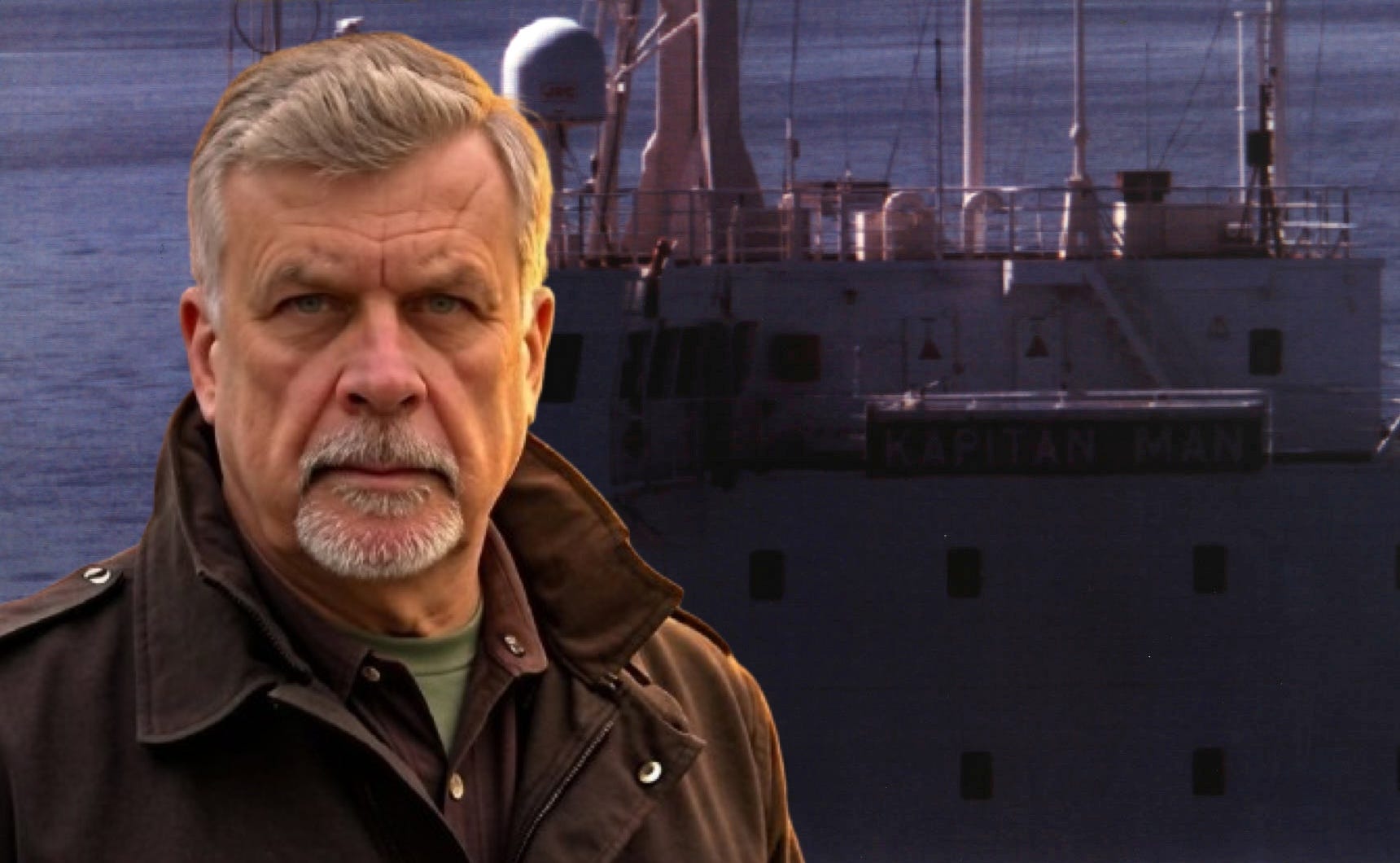
Welcome to In Focus, an occasional interview series with subject matter experts in the directed energy space.
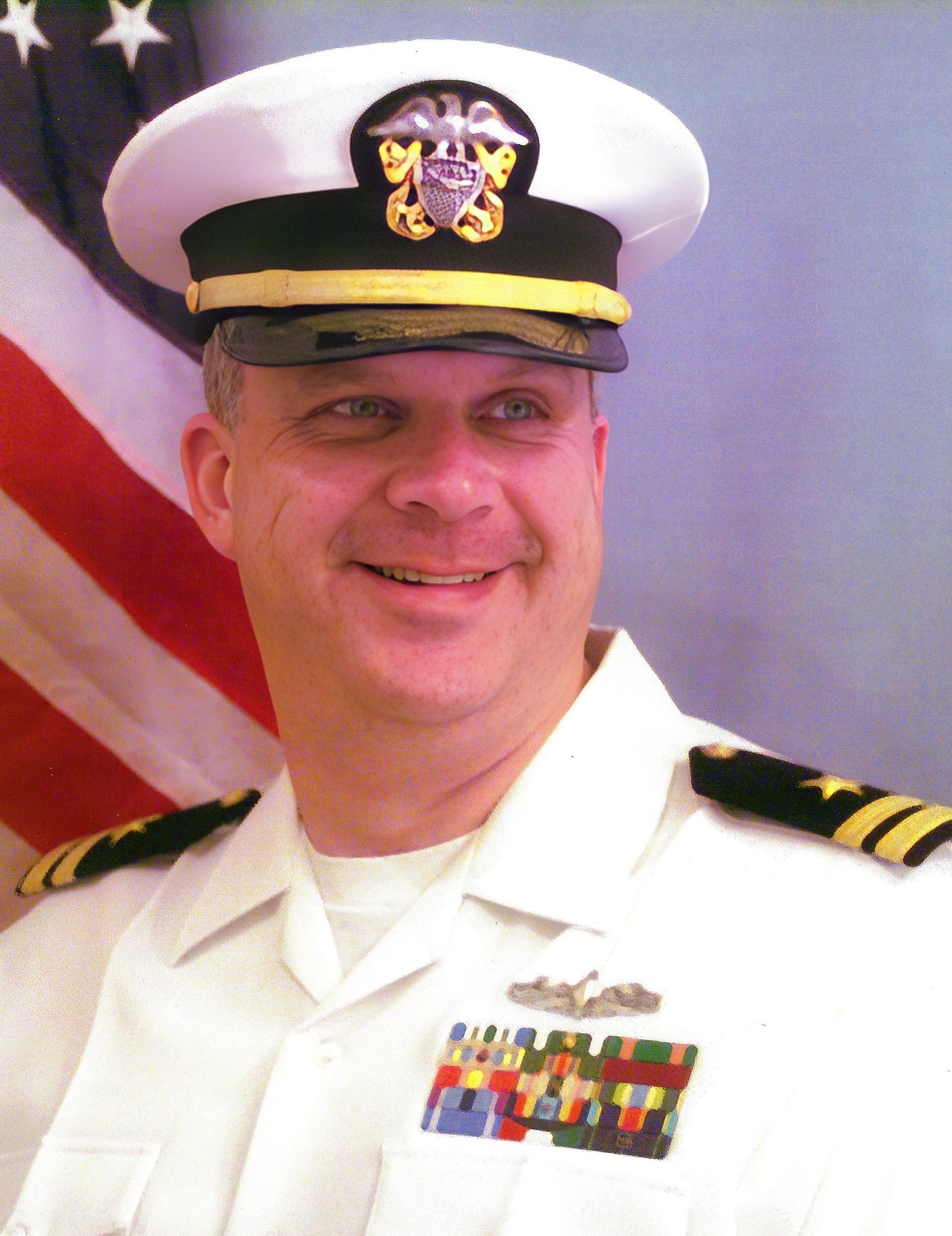
US Navy Lt. Cmdr. Jack Daly (Ret.) is a former naval intelligence officer injured by a suspected laser while photographing the Russian-flagged merchant vessel Kapitan Man, believed to be a spy ship, from a Canadian CH-124 helicopter in the Strait of Juan de Fuca between Washington state and British Columbia on April 4, 1997. Despite the lingering physical effects of the incident, a subsequent search of the Kapitan Man was unable to locate the laser system, and the Navy denied Daly a Purple Heart, counter to guidance from the US Defense Department Inspector General, on the grounds that the vessel did not qualify as part of a “hostile force” at the time.
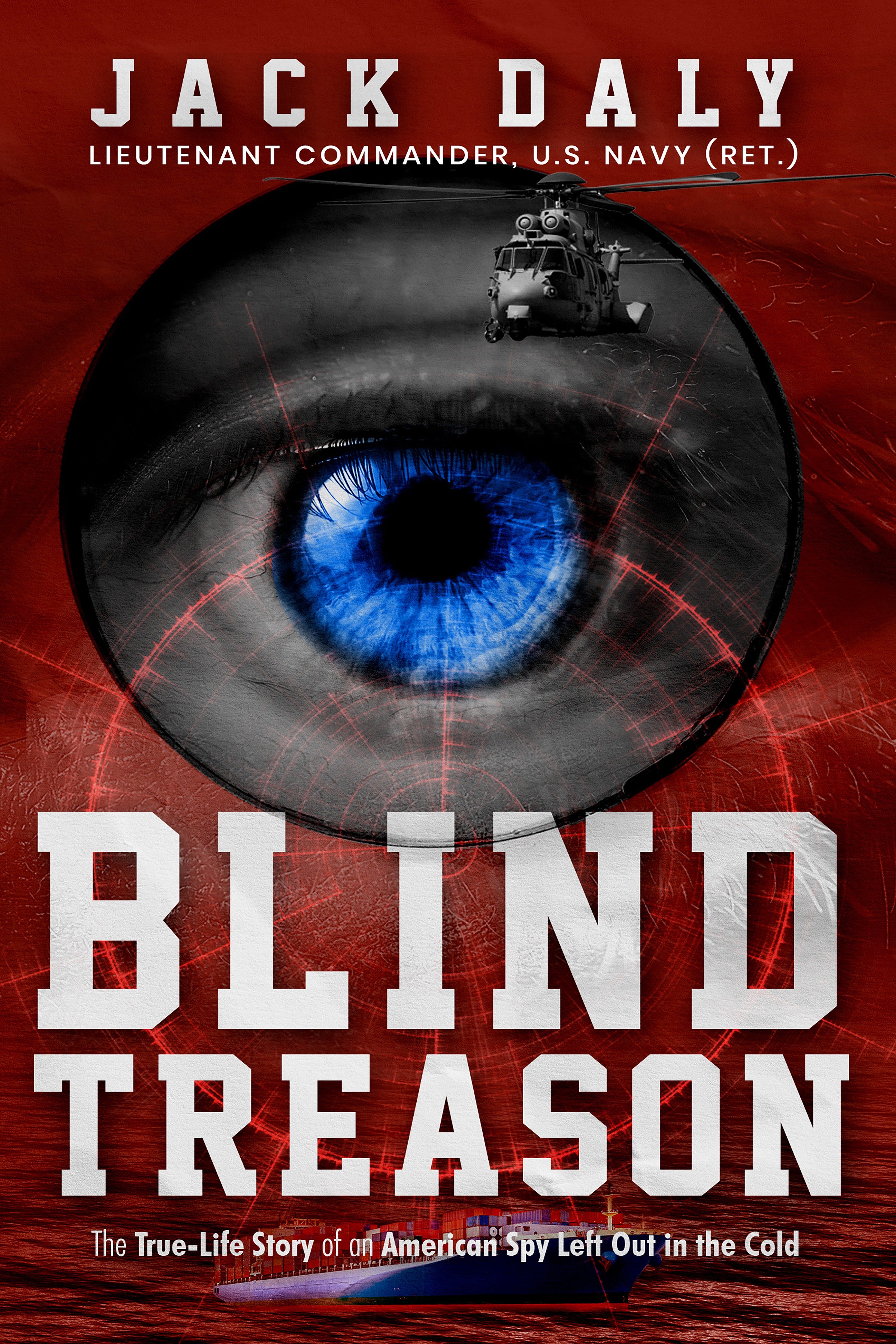
In his new book, Blind Treason: The True-Life Story of an American Spy Left Out in the Cold, Daly recounts the experience and its tumultuous aftermath, alleging that US government officials effectively overlooked an “act of war” to avoid destabilizing its fragile relationship with Russia.
This interview has been edited for length and clarity.
LASER WARS: Take me back to the day of the incident. What do you remember seeing or feeling from the aircraft in the moments before and after you realized something was wrong?
JACK DALY: I didn’t realize anything was wrong in the aircraft other than one particular instance.
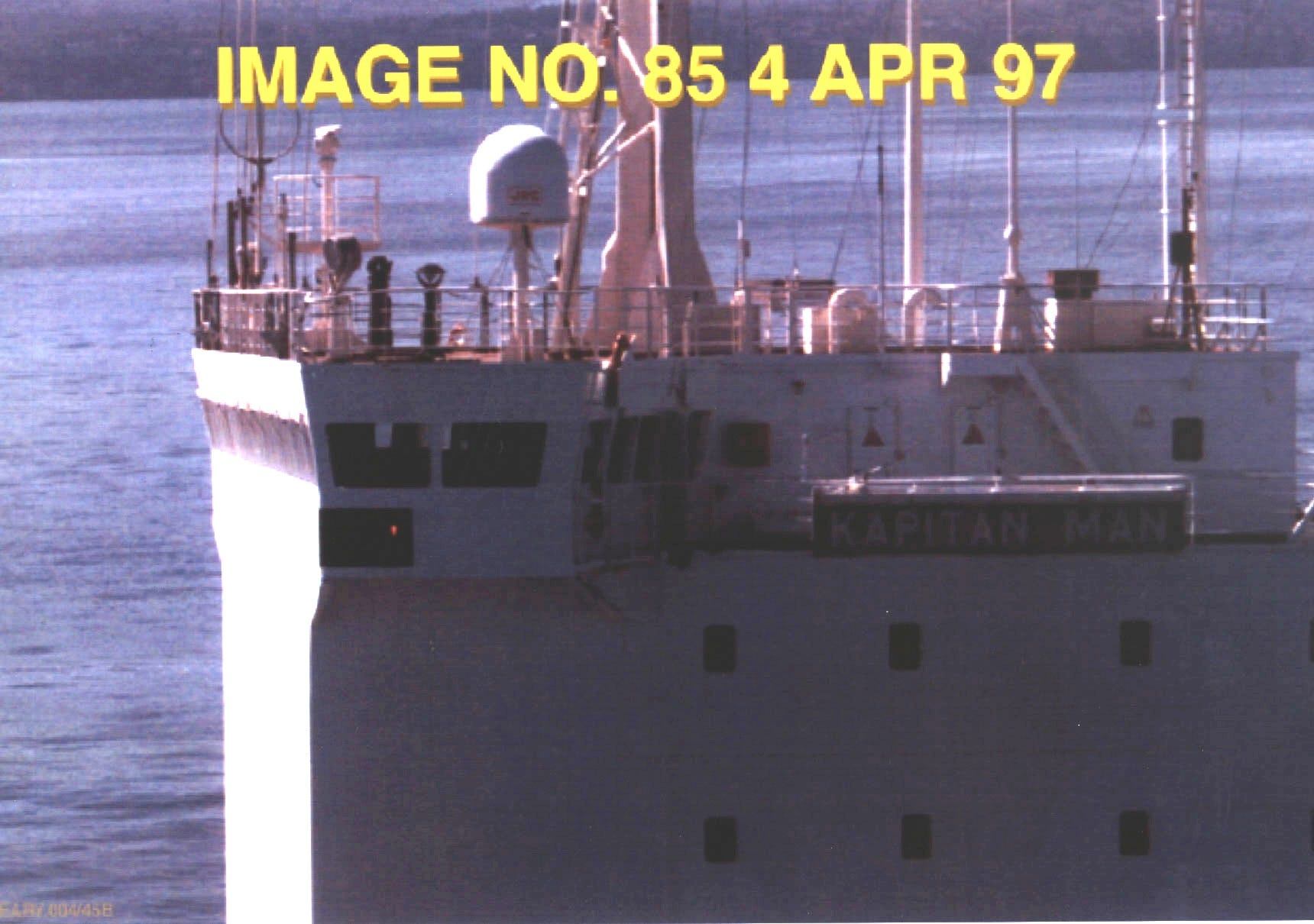
During the flight, we were doing clockwise 360s around the Russian-flagged motor vessel, the Kapitan Man, and I was using a new Kodak DCS digital camera, a DCS 420. It turned out that the hard drive could not keep up with rapid-succession photographs, so I think I had taken four or five photographs pretty quickly, and the hard drive froze. So I put the camera down in my lap, and I had my visor up because I couldn’t get the camera to my eye with my doggone visor down, and I was looking out at the bridge of the Kapitan Man. We were somewhat ahead of it and making a clockwise turn around her, and I saw a bright white flash.
It was about 12:15, 12:20 in the afternoon. I just mistook it for a solar glint, a flash of sun off the bridge windows, because it was a crystal clear day, sunny, beautiful, unlimited visibility, and I didn’t think much of it. But boy, that flash sure as hell hurt. If you can imagine being in a dark room, and somebody takes a picture with an old flash bulb camera, it was that kind of searing pain all of a sudden. That cleared after a while.
We landed. We had a box lunch. We debriefed. I headed into Victoria with my partner. Capt. [Pat] Barnes was the pilot in command of the CH-124. My partner — I won’t reveal his name — was a Canadian intel officer, and we shared an office. He had some history and background with these vessels. While he was taking some paperwork to his wife, I was sitting in the car, and my right eye started to bother me. I started rubbing it pretty intensely. That continued on until I got back to my office.
As I was sitting in my office, rubbing my eyes, my chief petty officer, Scott Tabor, walked in and asked me how the flight went, and I told him. He said, “You have any problem with your eyes?” And I said, “Yeah, I must have gotten something in them during the flight,” because I was leaning out of the side door on the helo to get some of the pictures, so there was wind shear and general debris in the air. He said, “Do you have a headache?” I said, “I do. It feels like somebody buried a pickaxe in the back of my head.” He laid a piece of paper on my desk, pointed to the port side running light, and he said, “You caught a laser in this photo. You’ve been shot with a laser.”
The first thought that came to my mind was: this was an act of war. A Russian spy ship fired on a Canadian helicopter in US airspace with a US naval intelligence officer. That’s an act of war. It doesn’t matter who’s in the helo; it’s still an act of war.
Following that, there was a Coast Guard search of the vessel, correct?
Yeah — combined Coast Guard, a couple of Navy personnel, an FBI agent. It was a search that the Russian crew knew 24 hours in advance was going to occur.
The chain of events there is that when we reported the incident via Navy reporting requirements, the US State Department was notified. The new ambassador-designate to Russia, James Collins, who worked under then-US Deputy Secretary of State Strobe Talbott, notified the Russian consulate in Seattle. Well, first he notified the embassy in D.C. They notified the consulate in Seattle. The consulate in Seattle contacted the captain of the vessel and told him: get rid of the laser.
The boarding party was restricted to two hours to search this massive ship. They tried to get into a particular space that the crew had called the “library.” It was locked. The crew would not allow them in that space, come hell or high water. So they pretty much gave up and went away. The FBI agent was there strictly as a linguist. He was not there in any investigative role whatsoever. It was a goat rope, for lack of a better term.
All these years later, do you have a better idea of what type of laser may have inflicted this damage? There was talk of it being a laser rangefinder, and then maybe some sort of unique system that had been previously undiscussed.
We knew within about the first or second week of the exams that we underwent down in San Antonio at the US Army Medical Research Detachment. Their laser bioeffects team made their determination based on the photos and the damage to my eyes and the damage to Barnes’ eye.
By the way, Barnes passed this past April 15. His wife told me that the last words he said to her were, “Can you get me some Tylenol? My eyes are killing me. And can you lower the shades? It’s too bright in here.” He went to his grave with the laser wounds. Thank God I’m still alive to carry them.
To answer your question specifically: yes, the group down in San Antonio determined it was a neodymium-doped YAG — yttrium aluminum garnet — laser operating about 1060 nanometers, give or take. The lab down there in San Antonio had the same camera. I had my chief fly down with the camera in its original setup that I used that day. They reproduced the photo in the lab — the same photo.
Years later, when I sued [Kapitan Man owner and operator] Far Eastern Shipping Company (FESCO) in civil court in a personal injury lawsuit, we hired a third party through Judicial Watch, who was representing me at the time — Larry Klayman and Tom Fitton and company. We hired one of the key experts on the US Strategic Defense Initiative program who was an expert in lasers. His name was Terry Kessler, from the University of Rochester.
Kessler did an analysis, and lo and behold, he replicated the same picture with the same camera setup: Kodak DCS 420 with two hot mirrors on it, et cetera. He provided his report to the legal rep team for FESCO. It got there 15 minutes late from Rochester to Seattle — at 5:15 in the evening Seattle time — and it was not permitted to be in evidence in court.
In testimony to lawmakers in February 1999, you said that the Office of Naval Intelligence didn’t have laser expertise and overrode the findings from the Army’s own experts. Did you witness the override?
I talked to the one and only laser expert at ONI. He was directed to stand down and have no role whatsoever in the so-called investigation into the incident. He went as far as trying to influence an Air Force intelligence officer who was savvy and knew about the incident, and whom I had spoken to. She told me that he called her and asked her to stand down, and was pretty adamant about telling her, “Do not report on this incident whatsoever.” And she told him, you know, pound sand: “This is important. I’m going to report on it.”
You’re alleging that because this was an act of war, and because of the incentives to maintain a status quo with the Russian government at the time, they said, we’re not going to look into this out of fear of upsetting the apple cart?
Well, exactly. Bill Clinton was president at the time. He told his senior officials that the last thing that the United States was going to do was “embarrass Boris Yeltsin in any way, shape, or form.” So my conjecture is that the orders came from the Oval Office to sweep this under the rug.
Those exact terms were used one day by a colleague when he got irritated with me. He was head of the crisis action team at the Pentagon. He said, “You have no idea the pressure I’m under to sweep this under the rug.” And right then and there, I knew: it blared cover-up.
Your congressional statement named Collins, [National Security Counsel Senior Director for Defense Policy and Arms Control] Robert Bell, and possibly Secretary Albright, and said Clinton was briefed daily on the incident. Is there additional evidence for a decision at that level, versus normal low-level diplomatic caution?
There’s nuance to the story. That nuance was that the State Department had to approve our collection plan. Highly unusual. Since when does the military have to provide their operational plans and their collection plans for blessing by the State Department?
There was one particular individual in the State Department who was a Russian counterintelligence expert at the time, and I firmly believe that he had at least eyes on our collection plan, if not being the approval authority. He was an FBI agent by the name of Robert Hanssen, the most damaging FBI spy in US history.
One of the folks that wrote an article about our incident was Dr. J. Michael Waller. He is a Russia expert himself, a former CIA covert operative, and he found out through his channels that there was information his source was getting on me, and his source was Hanssen. They were good friends. They were family friends. His family and Hanssen’s family went to the same church together and went to several events together.
I rode the elevator with the son of a gun the Friday before he was arrested. I didn’t know who the hell he was, but he looked like a funeral director. [I] found out years later that was his nickname at the bureau, because he always wore the same black suit, black tie, white shirt. When I asked our guys on our [counterintelligence] team what he was doing in our building that Friday, they said he was here to pick up his weekly briefings — which, because he was under suspicion for quite a while, they were just feeding him bogus stuff.
So I went down the elevator with him, watched him walk outside, take his satchel and put it in the trunk of his car. Well, that’s not exactly kosher. He just lost control of that thing. So when I talked to the CI team on Monday morning, I asked, “Where was he working in April of ‘97?” And they said, “Oh, he was the counterintelligence expert at the State Department.”
When I talked to Mike Waller after the arrest, Mike told me that he was Mike’s source, and he said, “Jack, he knew more about you than you know about yourself.” And I asked Mike straight out, “Do you think he played any role in what happened or the aftermath?” And Mike said, “At a minimum, he probably acted as an agent of influence.”
So my putting two and two together is that Talbott and maybe Albright pulled him into the conversation and said, “What do we do about this?” By conjecture — I have no proof of this, but my intel mind and my 15 years of experience tracking Russian activity tells me — he probably suggested: make this go away, because it was going to potentially bring light back on him.
You also linked the way the incident was handled to the Gore-Chernomyrdin Commission and the pending Russia-NATO pact that was signed in May 1997. Did you think those were also overriding factors in the decision-making?
Oh, absolutely. This thing reeked of politics. That’s probably the only way to say it. People who didn’t have the backbone or the moral fortitude within the Navy, and within the Office of Naval Intelligence specifically, rolled over and played dead from some order on high. That’s all I can figure about it. I don’t know who. I can assume who.
Do you think the US genuinely believed that this would cause a major diplomatic rupture with Moscow, and that was a bigger risk than an unresolved attack on their own troops?
When I signed on the dotted line, when Pat signed on the dotted line, we knew that we were putting our lives at risk, life and limb. That was acceptable. I had no problem with that. But after the incident happened, the way things were handled for both Pat and I, it was unconscionable that we were treated the way we were, when we both were under the impression: team member goes down, we don’t leave a man behind. We knew we were expendable, but to be treated the way we were was just absolutely beyond comprehension.
Tell me what it was like to be disbelieved — to have a law enforcement agency siding with the absence of proof, because they never found a device, over your own testimony and medical record. How did that feel?
One word: abandoned. Abandoned by the Navy. Abandoned by the military. Abandoned by our so-called leaders.
There were several congressmen and senators that went to bat for me and went after the Navy, went after the Department of Defense, and the obfuscation was running amok when they inquired. The one senator that really was able to punch a hole through the whole cover-up was Jesse Helms. Had it not been for Senator Helms, I would not have had a second or a third look at promotion from O3 to O4, to lieutenant commander.
He sent a scathing letter to William Cohen, who was the Secretary of Defense at the time, and told him that he was getting letters from his constituents that the treatment of myself and Barnes was just absolutely appalling. And he used his favorite term: look at this from an Occam’s razor viewpoint, where the most obvious story is probably the true one.
Let’s talk about the Purple Heart fight. The Navy’s reason for denying you a Purple Heart was that Russia wasn’t technically considered a hostile force. Do you see that as a legal technicality, a political shield, or both?
The Navy got it wrong. The Joint Chiefs of Staff instruction specifically identifies a hostile force as any military, paramilitary, civilian, or agent that commits a hostile act. A hostile act is defined as using weapons or other means to influence, or coerce, or deny operations — which was exactly what happened.
The Kapitan Man’s sister ship, the Anatoly Kolesnichenko, was due into Tacoma on Sunday, and we had planned a mission to fly against the Kolesnichenko on Sunday. All efforts against these ships were scrapped. Everybody was told to stand down. No further flights. No further surveillance on any of these ships in any way, shape, or form.
You were punished with a bad fitness report for testifying to Congress, and that report was overturned by the Navy Inspector General in 2000. So you were formally vindicated on the retaliation, and yet still denied a medal. What was that like?
Oh, it was frustrating beyond belief. I cried a lot. I yelled a lot. I pounded my thighs till they were black and blue. I punched holes in walls and doors, scared the living daylights out of my wife and kids and the dog. It was the most frustrating experience of my life.
Barnes, by contrast, was eventually recognized by the Canadian government as having a service-connected injury.
Pat was granted, through their equivalent of the Veterans Administration up in Canada, a 15% disability rating for the wounds to his right eye. I’ve been granted zero.
Where do things stand now with you and the government?
I retired back in November of 2024 from the Department of Defense. My last position, I was running the underground command bunker for the Secretary of Defense, a place called Raven Rock Mountain Complex. I think it was the most important job in the United States of America, because that was the continuity site. If push came to shove and missiles started coming over the poles, that place was meant to survive whatever kind of attacks might be thrown at it. So I worked in DoD for years.
Let me make a very, very clear statement so people understand: this was not the institution of the United States government. This was not the institution of the United States Navy. This was not the institution of the Office of Naval Intelligence. I have no qualms with the institutions. I have significant heartburn with some of the individuals in those institutions who had no backbone, were essentially cowards, and didn’t have the moral fortitude to stand up for one of their own.
You were called a liar, a lunatic, and a traitor within your own service. And you continued to devote yourself to service of country.
Because my service was more important than any name-calling, any accusations. Some of the people those accusations came out of, I didn’t have respect for to begin with. Here’s the bottom line, and this is the way I’ve always operated ever since I put on the uniform as an enlisted sailor: I have to respect the rank, but the person wearing that rank has to earn my respect.
How’s your eyesight today?
My eyes hurt like hell every single day, 24/7, 365. Some days are worse than others, especially if there’s any kind of a weather front about 48 hours out. I’m the best weather guesser in the United States, and I’m not like these weather guessers on TV that can get it wrong 50% of the time and still get a paycheck.
If a US service member was lased and blinded today, in the current geopolitical climate, do you think the government would handle it any differently than how it handled your case?
With this particular current geopolitical environment — with [Russian President Vladimir] Putin threatening us and others within NATO with tactical nukes in Ukraine and, should we respond, strategic nukes wherever, including in the United States — people who touted that the Cold War ended missed the mark by a million miles. Not to be funny, but the laser focus should be on the fact that Russia is not our adversary; they are our enemy. Putin would love to launch a nuke into D.C. I think he’s got an itchy trigger finger to do so.
President Donald Trump is the author and the creator of The Art of the Deal. He’s a businessman. He knows how to negotiate. He knows how to cut deals. I think he has met his greatest challenge in Putin. I think that the Russia-Ukraine war is not going to end until it ends badly for Ukraine. But if a US serviceman was lasered right now, I think there would be some serious negotiations going on, and I would pray to God that the poor individual is taken care of and not thrown under the bus like Pat and I were.
What do you want the public to understand most about what happened to you?
There’s nothing that can be done about the lasering. It is what it is. The damage to my eyes is what it is. What I am asking of the public, in the back section of the book called “Take Action,” [is that] I’d like to have that Purple Heart. I’d like to have that acknowledgement and recognition that I served and I sacrificed.
I wish Barnes could be issued a Purple Heart. If I get one, I’m sure as heck going to push that he gets one posthumously, because he earned his the hard way too.
Is the Purple Heart still under review, or did the Navy issue a final decision?
It was a final decision in 2004. That went back to the DoD IG, Joe Schmitz at the time, and the Navy said, “But even if we assume that the laser came from the Kapitan Man, there is no reason to declare the vessel a hostile force committing a hostile act.” Well, that’s where they got it all wrong. In that statement alone, they were 180 degrees out of sync with the JCS directive.
What’s something that I didn’t ask you that you wish I had?
One thing I want to emphasize: this saga destroyed my family. It tore us apart. It had such a negative impact on the family that it literally tore the five of us apart, and that’s very unfortunate. That’s a regret I have over the whole thing, because the laser attack was the impetus for our family being torn apart.
